Wednesday, October 28, 2009

Frank


Depending on who you ask, “In The Wee Small Hours” is the first successfully executed concept album. Meaning that one unified theme is a common thread throughout each and every song. That being the theme of lost love and isolation. Sinatra had attempted previously to release something that would be more than just an album of songs. Now with the birth of the new 33 1/3” LP format and it’s long playing capability, Frank’s vision would at last bear the desired fruit.

The title track and album opener is a sublime combination of orchestra and voice. Two verses, no chorus. The second verse is not even initially sung. It is instead played by searing violins that carry the melody Frank introduced us to in verse one. The tune does not leap out at you to convince you of its greatness. No, instead it casually spills out of the speakers and presents itself quite matter-of-factly.

Other selections, like Cole Porter’s glorious “What Is This Thing Called Love” get similar treatment. A lone clarinet slithers across the intro. This is the sound of sex itself. When sounds like this can emote wave upon wave of visual imagery one truly wishes that the music video had never been invented. This is what music is supposed to do to you. It’s supposed to make you close your eyes and fantasize. Sinatra’s vocals here are the best examples I can cite when I say that his voice is being used as an instrument. It slides like a trombone and bellows like a bassoon. Always with the orchestra and never overpowering, it is nothing less than a staggering mixture of sounds.

No shortage of great songwriting on this album either, and Duke Ellington’s “Mood Indigo” carries on the album theme. This selection is the one ballad that even approaches an up tempo, highlighted by some wonderfully perky saxophone. Nelson Riddle’s arrangements feature orchestral flourishes words will ultimately fail to describe. They are like delicate lace curtains intricately woven, but always in perfect taste.

Richard Rodgers and Lorenz Hart are dutifully represented here with three tracks penned by them. Of these, “Glad To Be Unhappy” is currently the personal favorite. Another casual masterpiece, with lyrics like “Since you took it right on the chin, You have lost that bright toothpaste grin….My mental state is all a-jumble.. I sit around and sadly mumble….Fools rush in, so here I am… Very glad to be unhappy”… He starts by referring to someone in the third person, but we soon find out that the singer is singing about himself, perhaps looking in a mirror. Again, here is searing visual imagery accomplished only by the use of words packing an emotional wallop. That’s why they called them standards, folks.

Certainly on an album of standards, it goes without saying that you have to include the great Hoagy Carmichael. His “I Get Along Without You Very Well” fits the theme of this platter like a glove. Here, Sinatra is most convincing as a man in denial trying to move on from a break-up. His personal life’s trials (Ava Gardner) parallel the lyrics eerily here as if it was written about him. The emotions being poured out are palpable. His voice breaks up just a little when he sings “except in spring” as if about to cry……whew.

So this record serves as a signpost, a signal to the then record buying public and the music industry as a whole that a record can be much more than a mere collection of tunes. It also continued the sweet rebirth to Frank’s recording career on the Capitol label after being dropped by Columbia. Both a critical and commercial success , it spent 18 weeks at #2 on Billboard, and is regularly cited among trade periodicals and other printed media as among the greatest records of all time.

Wednesday, October 7, 2009

Here's something to do with chicken...

Lord knows we have enough of it. So get some panko bread crumbs. Heat a skillet then add the oil. Mix about 1/8 cup of good vinegar and add two tablespoons of dijon. Add 1 tablespoon dried sage and one tablespoon dried thyme. Add 1/4 teaspoon dry mustard and mix it all together. Chicken breasts were cut in half and then pounded down with a mallet to about half their original thickness. Dip in mustard sauce, then the panko till coated well. Drop into medium-hot skillet. 5 minutes a side. If they're not done, finish them in a hot oven for 5 more mins or till that god forsaken chicken is done.

Our vegetable tonight was roasted broccoll, which is so great and easy. Put yer broccoli in a pan and toss it with a little olive oil and italian spice blend. Salt and Pepper it. This dish can be ready in 20 minutes at 450 degrees or in 45-50 minutes at 350. Either way it always comes out awesome. You can also do it with any vegetable, so CALL ONE TODAY!

Monday, October 5, 2009

The Kinks-RCA Years-(first of a series)


Whenever you read just about anything online or in print about the Kinks, all of the opinions dovetail together oh so nicely. British invasion band rides the wave. Dave Davies invents Heavy Metal by taking a razor blade to the speaker on his amplifier. Ray Davies’s practically unbeatable run of quality singles in the mid-sixties.
The mysterious banning of the group in America. The wilderness years at RCA. Their sudden rebirth as stadium rockers. The highs and lows of the band are well documented, and everybody seems to agree with each other on what those are. In some cases, even the band members themselves.

Well, I’m here to tell ya, it just isn’t so. One period in particular that sticks in my craw is between 1971 and 1975. All kinds of excuses come into play here. Ray was drinking too heavy, his marriage was falling apart, the band was rebelling against it’s leader, all great excuses except for one thing. The music doesn’t require any excuses. It’s as good an era as any in the band’s history, overshadowed only by the period that preceded it. By the way, that period is one of the greatest for any group ever. Tremendous LP’s and a run of singles that included “Sunny Afternoon”, “Dead End Street”, “Waterloo Sunset”, “Autumn Almanac”, “Mr. Pleasant” “Wonderboy” and last but certainly not least “Days”, this is an astounding run of quality work over a two year period. Impossible to top by almost any other pop group, much less The Kinks themselves.

So what we are going to attempt to do here is analyze the RCA years. We’re going to kick it off with “Muswell Hillbillies”, which is the first release during this timeframe. The record has a reputation of being a booze-soaked affair, but go back as early as “Face To Face” in 1966 and you can hear lots of slurred words and sloppy arrangements. Ray was no stranger to self-medicating but by now it was a source for the material itself, with “Alcohol” being the obvious example. This is what “sipping at your ice cold beer” leads to. It’s sadness tempered only by it’s humor, which by now Ray was a master at.. The comedic element in his writing is one of his most overlooked traits. There is nobody in the history of pop that can make you chuckle like Ray can.

Even the LP opener, “20th Century Man” is delivered in such a deadpan style to make it genuinely funny. It keeps the song afloat and puts a mask over the fact that it’s a absolute downer. “Napalm, hydrogen bombs, biological warfare”. Ray is painting quite the grim picture here. Notice how his voice is recorded to make him sound so small, like the voice on the dust speck from “Horton Hears A Who”. Speaking for the common man, but also skillfully demonstrating that no one is going to listen. Just about every song on this album carries the theme of alienation and despair sung in a comedic, cabaret style. This will be the main constant during this period . If only Marlene Dietrich could have covered a couple of these tunes. Or at least Lily Von Schtupp.

The record did not chart in the UK and sold poorly in the US. However, it received many positive critical reviews and has actually gained stature over time as one of The Kinks’ best records. Not bad for what can be arguably described as a departure from the formula success of “Lola”. Forging a new path along the shift in the pop landscape toward country rock with the success of bands like “The Band” , The Dead, Allman Bros and the like, Ray was applying his unique style and tailoring it more towards what the kids were buying and what the radio stations were playing. The result being an absolute gem of a record that does not fit easily into any commercial category. In other words, an absolute sales disaster.

Our next entry (at a later date) will be the second RCA LP, the half studio/half live “Everybody’s In Showbiz, Everybody’s A Star” in which Ray starts writing about food, the humdrum of stardom, pens another classic, and takes a horn section out on the concert trail.

Tuesday, September 29, 2009

ENO


Taking Tiger Mountain (by strategy)


The first time I heard Eno’s second solo album was when I was about 15 years old.
It was recommended to me by an older sibling who intrigued me with talk of this English conjurer who was too busy to be in a band, and strove for a higher form of aural expression. Eno was more interested in treatments of sound, and playing his tapes in order to experiment with pitch, timbre, and effects.

Tipped off that this album could be taken out at the town library of all places, I hopped on my 10 speed bike, library card in hand. I could tell right away that this was going to be a demanding journey (the album, not the bike ride). The record jacket itself was daunting, with it’s mosaic depictions of our hero in varying sizes and clarity. It turned out that the cover art was a metaphor for the ingredients inside. This music is very much a mosaic. Some of it very big, some of it very small. Songs appear that strike you right away, while other tracks insist that you explore them, too distorted to even make an initial impact.

Luckily, I was up for the challenge. One of the first things I picked up on was the element of whimsy. With an opening track titled “Burning Airlines Give You So Much More”, this was going to be either a terrorist manifesto, or groovy tongue-in-cheek beat poetry. Fortunately, the latter won out. I would later discover that Eno’s lyrical approach was basically him riffing random syllables on top of his backing track over and over to himself. Once he hit on a combination that complimented the music, he plugged in words that most closely matched those syllables.

The comedic elements don’t end there. Over the course of this LP we are confounded by all sorts of random sounds. Typewriters, whistling, goat-bleating sax riffs, blatantly spooky keyboard sounds, drums and other instruments intentionally recorded to sound like toys, and guitar solos that have been severely manipulated with pitch control and other types of “Enossification”.

Underneath it all though, is a very complex beauty. The basic tracks anchor the whole statement. They are extraordinary in their musicality. The backing vocals seem to emulate Gregorian Chant, but in a much higher octave. Today, we would refer to them as “soundscapes”. Eno was on the precipice of defining an actual approach toward music that had never been explored before. This would eventually be coined by him as “Ambient”. Music that exists in the background, at a volume level so low as to not call any attention to itself. The very beginnings of this approach can be found here, buried under all the mischievous overdubs and off-kilter dark lyrical themes. Eno was soon to discover that by peeling everything away, an entirely new musical language was available.

Monday, September 28, 2009

Avocado Video

If you can make it through this cinematic marvel, you will hear applause at the end from my dog. This video is not for instructional purposes. This is merely documentation of a random occurence. Do NOT prepare avocado this way. Honestly. Dont.

Wednesday, September 23, 2009

Listen To The Band


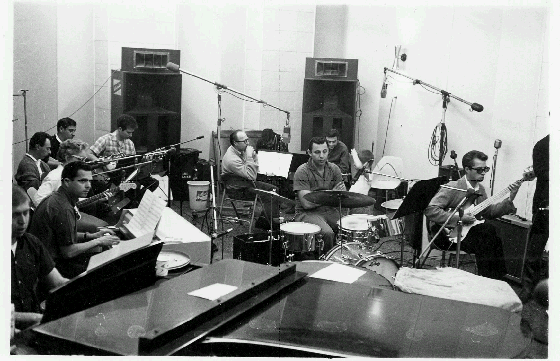
Everything is a myth. This needs to be established first and foremost. Even the reality that exists behind the myth is probably a myth too. Case in point “The Wrecking Crew”. In the genre of pop music these people are most commonly known as the studio musicians that played on just about every hit record that came out of Los Angeles, CA during the 1960’s and early 1970’s. I’m going to repeat that for emphasis. Just about EVERY hit record that came out of L.A. employed the same core group of musicians. Forget about all the glitz and glamour of the teen magazines and the album covers. Most pop stars simply did not do the heavy lifting when it came down to the business of making a record. There was a system in place and they were not part of it.

I promised myself that when writing this I wouldn’t fall into the trap of providing a laundry list of bands to back up my statements. However, to provide the appropriate context, I’m finding it necessary . So here goes. Artists such as The Beach Boys, Mamas and Papas, The Monkees, Nancy Sinatra, Herb Alpert, The Association, The 5th Dimension, The Carpenters, The Byrds, Johnny Rivers, Jan And Dean, The Ronettes, Bread, The Turtles, The Grass Roots and dozens of others all used paid professional studio musicians to make their records.

This “scam” if you will was perpetuated by the record companies themselves. The environment grew out of the ashes of the old Hollywood studio system. With no staff orchestras on the payroll, there became a growing need to hire musicians to do commercials as well as movie and television soundtracks. Add the birth of rock and roll to the equation, and you’re faced with the classic scenario of supply and demand.

So, there really was no “Wrecking Crew” per se. The moniker was in fact coined by session drummer Hal Blaine long after the fact. It was simply the way things were done. If you were in California and you wanted to make a record, you had to hire musicians. If you wanted the optimum chance to get the maximum return on your investment, then you hired the BEST musicians. Similar policies were in place at Motown studios in Detroit, as well as New York and Nashville.

Some of these people were new to the scene such as Glen Campbell. Others were making a steady living in Hollywood for a very long time. Someone like Larry Knechtel who played on sessions for Billie Holliday in the early 50’s as well as Beach Boys albums in the mid ‘60’s. Some had jazz backgrounds, others had country chops. This was a true melting pot of styles. In many instances they were encouraged to go over and above the sheet music that was handed to them. Commonly referred to as charts, it was understood that these were rough outlines of what was expected of them , and if they felt that they could embellish, then feel free to go for it.

The music is a permanent part of our lives. The story behind it, not so very well known. The accolades given for it, somewhat misplaced. So what you end up with is a group of cracker-jack musicians not being credited for collaboration on some of the most revered musical works of the pop era. Like I said, everything is a myth.

Friday, September 18, 2009

It's Alright Ma, I'm Only Bleeding, Ho,Ho,Ho.

It used to be that I would give my ‘60’s musical icons lots of leeway in regards to anything they would release in the present day. McCartney, Wilson, Stones, you get the picture. My reasoning being that they gave us enough great stuff, so that anything else they do should be looked at as if we’re lucky to still have them around. Around 10 years ago or so, Bob Dylan laid waste to that line of thinking by releasing a run of albums that arguably approach the quality and timelessness of even his best work. Although “Time Out Of Mind” suffered in my opinion from the broad brush strokes of Daniel Lanois’s production, it was still the best batch of Dylan songs in a dog’s age. Plus it won a “Best Album” grammy, so what the hell do I know. Proving this was no fluke, Bob followed up with the immaculate “Love And Theft” , and then the beautifully bluesy “Modern Times”. This trilogy of records proves that ‘60s icons can in fact create vital works of art if they decide to get off their ass and do so.

I’m embarrassed to say while writing a Dylan piece that I have not heard his latest, “Together Through Life” as of yet, but I have heard that it’s solid, if not spectacular. Off the heels of this, Bob’s next move is to release a Christmas album towards the middle of next month. With all the proceeds going to charity, and his recent run of solid records it would be more than ok for Dylan to “mail this one in”. Fat chance. If the 30 second sound clips recently uploaded onto Amazon.com are any indication, this record is destined to be a Christmas classic. What shines through here initially is a steadfast loyalty to THE SONGS. All of the arrangements are traditional, all instruments organic. No attempt is made to try and put forth a musical style. By taking this approach, Dylan appears to have created something timeless in a vein where timelessness is all too often the exception and not the norm. Honestly, we shouldn’t be surprised.